Why Heavy Summer Rain Causes Drain Backups
A storm rolls through, and an hour later the floor drain is wet, the toilet gurgles, or the tub won't empty. If that pattern sounds familiar, the rain isn't a coincidence. A drain backup after heavy rain almost always points to something wrong between your house and the main line.
If water is backing up into a tub, shower, or floor drain right now, stop running water anywhere in the house and call Plumbing Police at (540) 371-3570. We answer 24/7.
What Causes a Drain Backup After Heavy Rain?
Your drain lines are supposed to be a closed system. Rain shouldn't be able to get in. When a storm changes how your drains behave, it means water is entering somewhere it shouldn't or the line has lost capacity.
The usual causes we find:
- Cracks or open joints in an older sewer line. Groundwater seeps in through the damaged section and fills the pipe from the outside.
- Tree roots. Roots find small openings, grow toward the moisture, and slowly choke the pipe. A partly blocked line handles normal use fine and fails under storm volume.
- Downspouts or sump discharge dumping in the wrong place. If storm water is routed into a drain line or right up against the foundation, you've added a flood to a pipe that wasn't built for it.
- A sagging section of pipe. Ground shifts over decades, a low spot forms, and debris settles there.
- Municipal system volume. During a hard rain, public systems carry far more water than usual, which slows how fast your line can drain into them.
This section assumes your home is on public sewer. If you're on a septic system, skip ahead — the cause is different.
Warning Signs That Show Up Before a Backup
Main line problems announce themselves for weeks before they make a mess. Most homeowners just don't know the signals.
- Toilets gurgle when the washing machine drains
- Two or more fixtures are slow at the same time
- The floor drain is damp after every storm, then dries out
- A sewer odor in the yard or near a cleanout after rain
- One patch of lawn stays soggy or grows noticeably greener
- Water rises in the shower when you flush a nearby toilet
The key takeaway: one slow drain is usually a local clog. Two or more slow drains at the same time point to the main line. That difference decides whether this is a small job or a growing one. Our post on sewer line warning signs every Virginia homeowner should know walks through the rest of the symptom list.
What to Do Before the Next Storm
Late summer brings our heaviest rain of the year. A little prep now costs you an afternoon instead of a cleanup.
- Find your main water shutoff and label it. It's usually in the basement, crawlspace, or utility room near where the line enters the house. Turn it to make sure it isn't seized, then turn it back.
- Clear your gutters and extend your downspouts. Water should discharge several feet away from the foundation, not beside it.
- Test your sump pump. Pour a bucket of water into the pit and confirm the pump kicks on and shuts off. Don't reach into the pit, unplug the unit, or open it up. If it doesn't run, call us.
- Keep the area around your floor drain clear. Storage boxes and laundry piles turn a small backup into a damaged one.
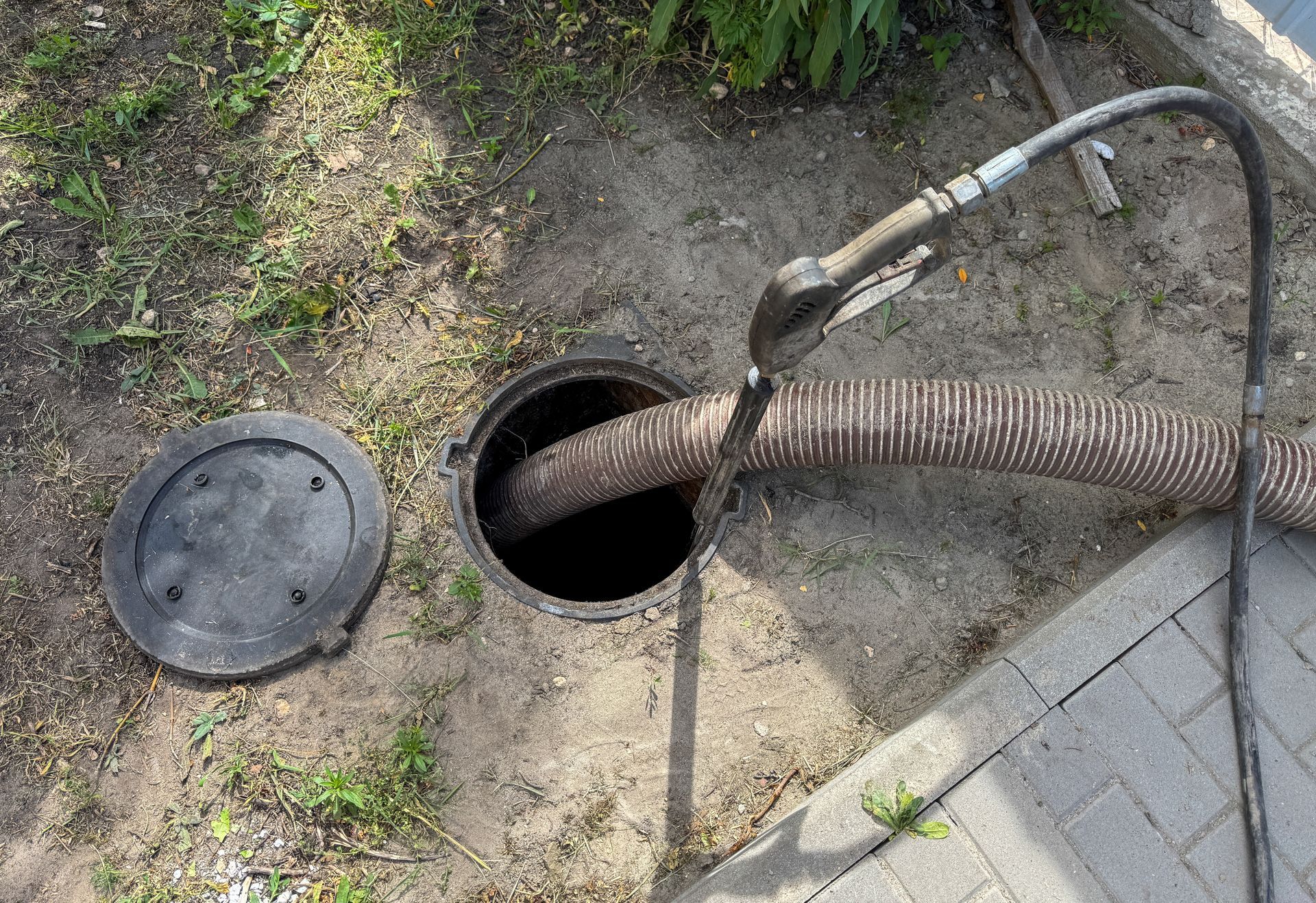
- Know where your sewer cleanout is. It's typically a capped pipe in the yard or basement. Locate it so you can point us to it, but leave opening it to a plumber. Pressure behind that cap can release fast.
- Skip the chemical drain cleaner. It won't touch roots or a cracked pipe, and it eats away at older cast iron and PVC joints. If your drains are slow, the problem is physical and needs to come out physically.
If You're on a Septic System
Homes on septic in the more rural parts of our service area back up for a different reason. Heavy rain saturates the soil in the drain field, and saturated soil can't absorb what the tank sends it. The system has nowhere to put the water, so it backs toward the house.
During and right after a hard rain, cut your water use. Spread laundry across several days, take shorter showers, and hold off on the dishwasher. Keep vehicles and equipment off the drain field year-round, since compacted soil drains even worse. If backups happen every time it rains, the system needs to be inspected rather than just pumped.
When to Call a Plumber
Call us if you're seeing any of these:
- Backups or a wet floor drain after every heavy rain
- Two or more fixtures draining slowly at once
- A sewage smell inside the house or in the yard
- Water coming up through a floor drain, tub, or shower
- A sump pump that won't run, runs constantly, or trips a breaker
- Gurgling from toilets when other fixtures drain
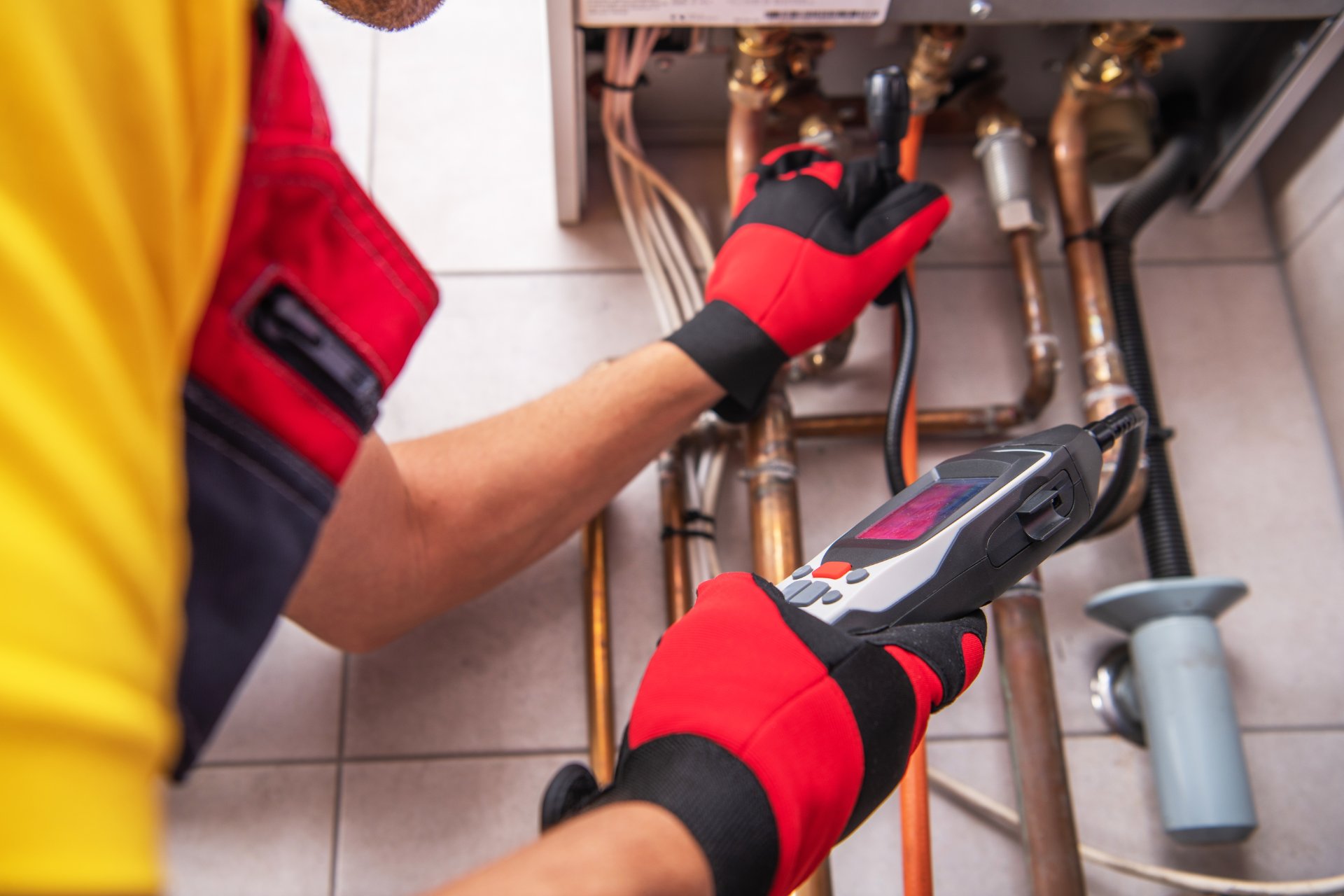
For a recurring problem, we run a camera down the line to see exactly what's happening, which tells us whether this is a job for professional drain cleaning or whether the pipe itself is failing and needs sewer line and waterline replacement. Guessing at a main line problem is how homeowners end up paying twice.
Get It Diagnosed Before the Next Big Rain
A main line that's already struggling doesn't get better on its own, and the next storm is the test it's going to fail. Finding a root intrusion or a cracked joint now means scheduling the work on your terms instead of on a Saturday night with water on the floor.
Call Plumbing Police at (540) 371-3570 to get your drains checked. We serve Fredericksburg, Spotsylvania, Stafford, Locust Grove, Orange, and King George, VA, and we're available for 24/7 emergency plumbing repairs when a storm doesn't wait for business hours.